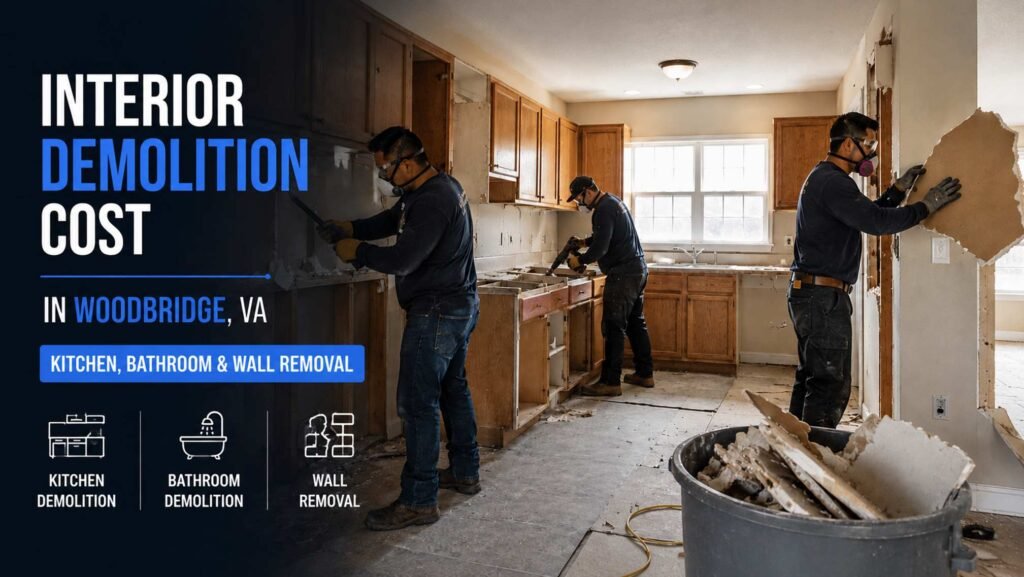
The average interior demolition cost Woodbridge, VA ranges from $1,500 to $5,000 depending on the project scope. Gutting a kitchen or bathroom costs significantly more than simple non-load-bearing wall removal due to complex plumbing and electrical disconnections. The final price relies strictly on square footage, structural complexity, and local disposal fees.
What Determines the Interior Demolition Cost?
Contractors do not use flat rates for interior teardowns. Every renovation project requires a custom estimate based on the physical realities of the space. Pricing relies on labor duration, safety requirements, and Prince William County landfill disposal fees.
Here are the primary factors that dictate your final interior demolition estimate:
- Square Footage: Larger rooms require more labor hours to dismantle and generate more structural waste. Landfills charge based on the total weight of the debris.
- Utility Complexity: Rooms with active water lines, gas pipes, and heavy electrical wiring require careful, methodical deconstruction. Disconnecting and capping these lines takes specialized time and precision.
- Structural Integrity: Tearing down a load-bearing wall requires temporary support beams and structural engineering oversight. Non-load-bearing walls are faster and cheaper to remove.
- Dust Control and Prep Work: Interior work requires heavy plastic sheeting, floor protection, and negative air pressure systems to prevent dust from contaminating the HVAC system. Extensive prep work increases the initial labor cost.
Average Interior Demolition Cost by Room
Different rooms contain different building materials. Removing heavy porcelain bathtubs or granite countertops requires more physical labor than tearing down standard bedroom drywall.
| Project Type | Average Cost Range | Primary Pricing Factors |
| Kitchen Demolition | $1,500 to $3,500 | Cabinet removal, heavy appliance hauling, plumbing disconnects |
| Bathroom Demolition | $1,000 to $2,500 | Tile removal, cast iron tub extraction, toilet and sink disposal |
| Wall Removal (Non-Load) | $300 to $800 | Drywall cutting, wood stud removal, electrical wire capping |
| Full Gut Renovation | $4,000 to $10,000+ | Complete drywall, flooring, and fixture removal down to the studs |
Kitchen Demo Cost
The average kitchen demo cost is high due to the density of heavy materials in a small space. Contractors must carefully remove upper and lower cabinets without damaging the ceiling or remaining walls. Kitchens also feature heavy granite or quartz countertops that require multiple workers to lift safely. The project includes hauling away outdated refrigerators, stoves, and dishwashers. Contractors must safely cap water supply lines and 220-volt electrical outlets before structural teardown begins.
Bathroom Demolition Cost
The bathroom demolition cost reflects the intense labor required to break apart masonry and ceramic tile. Removing floor-to-ceiling shower tiles requires heavy rotary hammers and generates massive amounts of heavy debris. Extracting cast iron bathtubs often requires cutting the tub into pieces inside the room to fit through narrow residential doorways. Plumbers or qualified contractors must completely secure all water lines and seal drain pipes to prevent sewer gases from entering the home.
Cost to Remove a Wall
The cost to remove a wall depends entirely on its structural role in the house. Removing a non-load-bearing partition wall is a straightforward process involving drywall removal and wood stud extraction. However, tearing down a load-bearing wall requires installing temporary shoring walls to support the ceiling. Load-bearing wall removal often requires a structural engineer’s report and specific municipal permits. Both types of wall removal require rerouting any electrical wiring hidden inside the cavity.
Gut Renovation Demolition Price Northern Virginia
The gut renovation demolition price Northern Virginia homeowners pay covers stripping an entire property down to the bare wooden studs. This massive undertaking includes removing all flooring, drywall, ceilings, and non-structural partitions. Investors and homeowners utilize this service after severe water damage, fire damage, or when preparing for a completely new floor plan. Gutting an entire house requires industrial dumpsters, multiple days of continuous labor, and strict compliance with local zoning and waste management laws.
The Professional Interior Teardown Process
Interior demolition requires far more precision than exterior work. Contractors must protect the remaining living spaces from damage and airborne contaminants. Property owners must know what demolition service actually includes before starting a renovation to ensure they hire a fully equipped crew.
- Step 1: Site Preparation: Contractors cover floors with heavy ram board and seal doorways with thick plastic sheeting to contain dust.
- Step 2: HVAC Protection: Crews seal all air conditioning vents and returns in the work area to prevent drywall dust from circulating through the house.
- Step 3: Utility Disconnection: Workers verify that all water, gas, and electricity running to the targeted room are completely shut off at the main breaker or valve.
- Step 4: Systematic Deconstruction: Contractors remove fixtures, cabinets, and drywall systematically. They work from the top down to prevent uncontrolled collapses.
- Step 5: Debris Removal: Workers load the heavy materials into wheelbarrows, transport them carefully through the house, and load them into a commercial dump truck parked outside.
Hazardous Materials and Woodbridge Regulations
Executing interior demolition in older Woodbridge homes requires strict safety protocols. Homes built before 1980 often contain asbestos in floor tiles, pipe insulation, or popcorn ceilings. Older homes may also feature lead-based paint on baseboards and cabinets.
Contractors must stop work immediately if they suspect hazardous materials are present. These materials require professional testing and specialized abatement procedures. Standard demolition crews cannot legally transport asbestos or lead paint to the Prince William County landfill without proper hazardous waste certifications.
Homeowners must also secure the necessary building permits from the Prince William County Department of Development Services before removing any structural walls or altering the home’s plumbing footprint. Licensed demolition contractors handle this permitting process to ensure full municipal compliance and avoid heavy project fines.
FAQs: interior demolition cost Woodbridge, VA
Do I need a permit to gut my kitchen in Woodbridge?
You do not need a permit to remove cosmetic items like cabinets, countertops, or flooring. You strictly need a permit if you plan to move electrical outlets, alter plumbing lines, or remove load-bearing walls during the kitchen demolition process.
Can a junk removal company tear out my bathroom?
No, a standard junk removal company cannot legally or safely tear out a bathroom. Bathroom demolition requires cutting water lines, breaking ceramic tile, and utilizing power tools. You must hire a licensed demolition contractor with specific structural liability insurance for this work.
How do contractors keep dust out of the rest of my house?
Professional contractors utilize heavy plastic barriers, zipper doors, and negative air pressure machines equipped with HEPA filters. They also seal all HVAC vents in the work zone to guarantee dust does not travel into your clean living spaces.
What is the fastest way to get rid of demolition debris?
The fastest way to handle debris is to hire a full-service demolition contractor who includes the haul away phase in their estimate. They bring commercial dump trucks, load the debris immediately, and transport it to the local transfer station the same day.
Will interior demolition damage my hardwood floors?
Professional demolition crews will not damage your floors. They lay down thick, impact-resistant floor protection boards (like Ram Board) from the front door all the way to the work zone before carrying any heavy tools or debris through the house.
Final Thoughts
Interior demolition is a highly technical process requiring strict safety protocols, dust management, and utility expertise. The total cost of tearing out a kitchen, bathroom, or wall depends directly on the structural complexity and the physical weight of the discarded materials. Attempting to gut a room without professional equipment often leads to ruptured water lines, electrical hazards, and severe property damage. Hiring a licensed local demolition contractor guarantees that the teardown phase is handled safely, the property remains clean, and all debris is disposed of according to Prince William County regulations.
Key Takeaways for Your Interior Demolition Project:
- Verify Utilities: Ensure all water, gas, and electrical lines in the work zone are completely shut off and capped by professionals before physical work begins.
- Expect Dust Prep: Demand that your contractor outlines their exact dust containment strategy, including floor protection and HVAC sealing, before signing an agreement.
- Identify Wall Types: Consult a professional to determine if a wall is load-bearing before attempting any removal. Taking down a structural wall improperly will cause ceiling collapse.
- Check Local Codes: Verify with Prince William County if your specific interior renovation requires a building permit, especially if plumbing or electrical systems are being exposed.