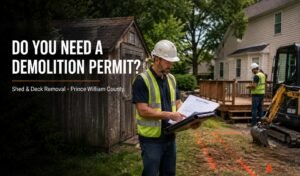
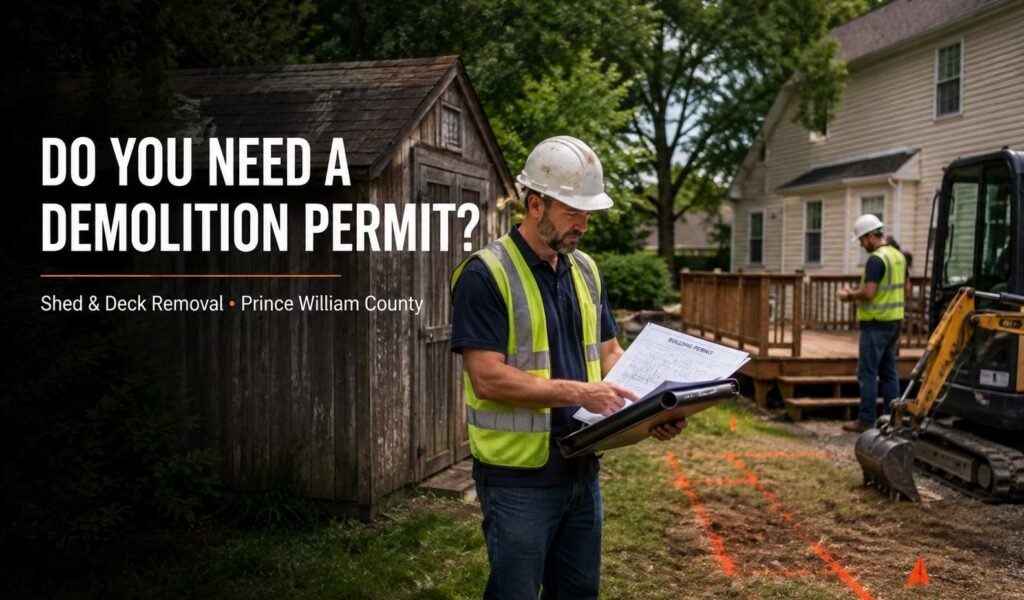
You must obtain a demolition permit from Prince William county if the targeted structure exceeds 256 square feet or is physically attached to the primary residential foundation. Unattached, freestanding structures falling under this specific size limit typically do not require formal municipal approval for removal. However, active utility connections alter these baseline requirements entirely.
Decoding PWC Building Permit Demolition Regulations
Navigating local bureaucracy is the most critical phase of any exterior property update. The Prince William County Department of Development Services strictly regulates structural alterations to ensure community safety, environmental protection, and zoning compliance.
A pwc building permit demolition application forces property owners to document their teardown strategy. Municipal inspectors review these applications to confirm that the deconstruction process will not disrupt active underground utility grids or violate neighborhood property line setbacks. Removing a structure without this official oversight exposes homeowners to severe financial penalties, immediate stop-work orders, and liability for accidental civic damage.
Permitting Requirements by Structure Type
Local building codes categorize structures based on their size, foundation type, and physical connection to the main house. Understanding these classifications dictates your administrative responsibilities.
| Structure Category | Size / Status Specifications | Official Permit Required? | Core Regulatory Factor |
| Small Storage Sheds | Under 256 sq. ft. (Unattached) | No | Considered temporary or accessory structures |
| Large Barns & Sheds | Over 256 sq. ft. | Yes | Exceeds accessory size limits |
| Attached Decks | Fastened to the house ledger board | Yes | Impacts the primary foundation integrity |
| Floating Platforms | Freestanding, under 256 sq. ft. | No | Does not impact primary dwelling structure |
| Structures with Utilities | Wired for electricity or plumbing | Yes | Requires licensed utility disconnection |
Shed Demolition Permit Woodbridge VA Standards
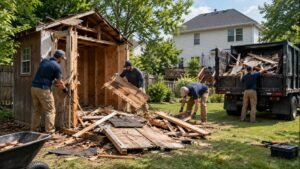
Homeowners frequently ask, do i need a permit to tear down a shed in my backyard? The answer depends on the footprint and the infrastructure. A standard 10×12 plastic or wooden garden shed rests well below the 256-square-foot threshold. You can dismantle this unit immediately.
However, obtaining a shed demolition permit woodbridge va becomes mandatory if the outbuilding features a dedicated electrical panel, active plumbing, or a permanent concrete slab foundation. The county requires proof that licensed professionals have permanently capped these specific utility lines before any heavy machinery arrives on site.
Deck Removal Permit Virginia Codes
The regulations surrounding a deck removal permit virginia mandate careful inspection of the structural attachment points. A deck physically bolted to your home via a ledger board acts as an extension of the primary residence. Removing it impacts the waterproof barrier and structural integrity of the house. Therefore, the county demands a permit to ensure the exterior wall is properly sealed and protected after the teardown. Conversely, a freestanding floating deck situated in the middle of the yard rarely requires administrative approval.
The Application and Approval Process
Securing municipal approval involves a precise sequence of administrative steps. Missing any detail delays the project timeline significantly.
1. Utility Marking (Miss Utility)
Before submitting any paperwork, property owners must contact Virginia’s Miss Utility service. Technicians visit the property to spray-paint the exact locations of buried gas, water, and electrical lines. You cannot safely dig up concrete fence posts or deck footings without this visual map.
2. Site Plan Documentation
The county requires a visual site plan detailing the property boundaries and the exact location of the structure slated for removal. This document proves that the teardown process and heavy equipment placement will not encroach upon neighboring properties or public sidewalks.
3. Application Submission and Fees
Contractors submit the application alongside the utility confirmation and site plan to the Department of Development Services. The county assesses a processing fee based on the scope of the deconstruction. Approval times range from a few days to several weeks depending on the current municipal backlog.
The Risks of Unpermitted Teardowns
Attempting a covert demolition project carries massive financial and legal risks. County code enforcement officers actively patrol residential neighborhoods looking for unpermitted construction and deconstruction zones.
If caught dismantling a regulated structure without documentation, the county issues an immediate stop-work order. You will face heavy municipal fines and must pay retroactive permitting fees at a premium rate. Furthermore, standard homeowner’s insurance policies explicitly void coverage for any property damage caused during an unpermitted renovation. If a falling beam damages your neighbor’s fence during an illegal teardown, you bear 100% of the financial liability.
Regulatory Compliance and Contractor Selection
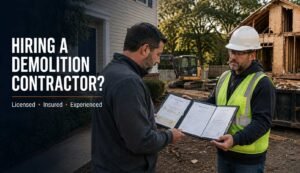
Hiring a specialized local contractor eliminates the administrative burden of permit applications. Licensed professionals understand local zoning laws, maintain relationships with county inspectors, and carry the necessary commercial liability insurance to protect your property.
General laborers and standard junk haulers do not pull municipal permits. Property owners must thoroughly know the difference before you hire a crew. Selecting an unqualified team for a regulated teardown transfers all legal risks directly to the homeowner.
FAQ: Demolition Permit Prince William county
How much does a demolition permit cost in Prince William County?
The exact fee fluctuates based on the square footage of the structure and the complexity of the utility disconnections. Standard residential teardown permits typically cost between $100 and $300. Your licensed contractor will calculate this exact fee and include it in your initial project estimate.
Can a homeowner pull their own building permit?
Yes, a homeowner can act as their own general contractor and pull the permit directly. However, doing so makes you legally responsible for all workplace safety, structural codes, and proper hazardous waste disposal. It is highly recommended to let your licensed demolition company pull the permit under their commercial credentials.
What happens if I rebuild a new shed in the exact same spot?
Tearing down an old structure and building a new one requires two separate permits. The demolition permit covers the safe removal and disposal of the old materials. You must subsequently apply for a new construction permit to erect the replacement building, ensuring it meets updated 2026 building codes.
Do I need an inspection after the structure is removed?
Yes. Once the structure is completely removed and the site is cleared, a Prince William County inspector must visit the property. They verify that the work matches the approved site plan, all utilities are safely terminated, and the land is graded properly to prevent drainage issues.
Are permits required for interior cosmetic demolition?
Cosmetic updates like removing drywall, pulling up carpet, or dismantling kitchen cabinets do not require municipal approval. Permits are only triggered when you alter load-bearing walls, reroute plumbing pipes, or modify the home’s electrical grid.
Compliance and Safety Checklist
Executing a structural clearing project in Woodbridge requires strict adherence to local laws. Bypassing the county regulations exposes your home to unnecessary hazards and severe legal penalties.
Pre-Project Requirements:
- Measure the exact square footage of the structure to verify if it crosses the 256 sq. ft. county threshold.
- Inspect the structure for hidden utility lines, including buried electrical wires running from the main house to a backyard barn.
- Contact Miss Utility to mark all underground hazards before any heavy excavation begins.
- Hire a fully licensed demolition contractor who actively manages the municipal application, inspection, and final sign-off processes on your behalf.